Si quieres más información, haz «clic» sobre la imagen.
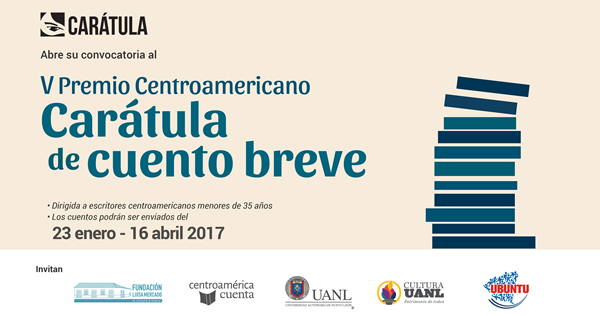
Si quieres más información, haz «clic» sobre la imagen.

Queremos agradecer por este medio el apoyo de la Cámara Panameña del Libro, con la cual, como libreros, mantenemos relaciones desde hace muchos años. Esta instancia gremial nos ha dado el apoyo necesario para brindar capacitaciones a nivel nacional, sufragar ciertos gastos legales, cubrir una anualidad de inscripción en IFRRO (International Federation of Reprographic Rights Organizations) y otros temas de vital importancia en estos inicios.
Aprovechamos para invitar a editores y autores a conocer un poco más sobre la Sociedad de Editores y Autores, SEA, primera organización panameña dedicada a la defensa de los derechos de autor de obras escritas.

En estas fechas, durante el IFRRO World Congress and Annual General Meeting 2016, SEA firmó finalmente acuerdos de representación recíproca con CADRA de Argentina, CDR de Colombia y CEDRO de España. Además, revisó acuerdos que se desea firmar con CCC de Estados Unidos y con CLA de Gran Bretaña. Los acuerdos de representación recíproca permiten la defensa de diversos aspectos de los derechos de autor en los territorios de los frmantes, sean las obras parte de los catálogos de una u otra entidad.
 Del 26 de noviembre al 4 de diciembre de 2016 se llevará a cabo la edición número 30 de la Feria Internacional del Libro (FIL) de Guadalajara. De acuerdo con la reseña del sitio web de la FIL 2016, ésta fue creada en 1987 por iniciativa de la Universidad de Guadalajara y es actualmente el mayor mercado mundial de publicaciones en español. Cada año recorren sus pasillos editores, agentes literarios, promotores de lectura, traductores, distribuidores y bibliotecarios, que acuden a realizar intercambios comerciales y profesionales. En la FIL también se dan cita más de 700 mil personas, que a lo largo de nueve días se sumergen en los libros y disfrutan de uno de los festivales culturales más importantes de Amé- rica Latina. Más allá de las cifras, la FIL es un patrimonio vital y concreto de la cultura iberoamericana. Mediante sus tres áreas de acción (la editorial, la académica y la cultural), se ha consolidado como punto de encuentro para la discusión en torno a la cultura contemporánea. Escritores, académicos, artistas, intelectuales y muchas otras personas interesadas en el intercambio de ideas sobre el acontecer cultural acuden a este encuentro anual. La FIL es, además, una oportunidad única para renovar los lazos que unen a México e Hispanoamérica con otras culturas. Desde 1993, la Feria tiene un país o región Invitado de Honor para que muestre en este foro internacional lo mejor de su producción editorial y artística. América Latina será la Invitada de Honor en 2016.
Noticempro es el boletín informativo de CEMPRO (Centro Mexicano de Protección y Fomento del Derecho de Autor.
 August 23, 2016 by
In our latest formal submission to the US Copyright Office on August 18th, the NWU and two other writers’ organizations provided an overview of the “new normal” for writers seeking to earn a living in the digital age. We also discussed how copyright policies designed for publisher-centric business models and old media serve to deprive writers of our fair share of revenue from emerging digital markets.
Publishers have long been required to submit two copies of the “best edition” of each printed “work” to the Library of Congress’ collection. But should a similar “mandatory deposit” rule apply to the contents of
—e-books
—downloadable files
—email newsletters
—blogs
—websites
—Facebook
—social media postings
—text in mobile apps/electronic games
—other digital formats?
What types of “e-books” or “online serials” should be included in that requirement? How would it work? Or would it work at all?
Another important question to ask is what effect would a mandatory deposit requirement for everything we distribute online have on writers’ ability to engage in normal commercial exploitation of our written work? That’s the legal test established by the Berne Conventionand other international copyright treaties.
The Copyright Office has begun demanding that publishers of some “electronic serials”—periodicals published only online or in electronic formats—deposit copies with the Library of Congress on a trial basis under an “interim rule” adopted in 2010 following public notice and comment. Last year, the Library began making these deposited copies available for viewing and free copying (!) on terminals at the Library of Congress. Now the Copyright Office hasproposed to expand that interim rule for digital periodicals to e-books. Any user of the Library of Congress would be able to make one free, complete printed copy of any e-book deposited with the Library.

The Copyright Office has again asked for feedback from stakeholders and members of the public. So we’ve told themwhat we think: Librarians mean well by trying to preserve the work we publish online. But they don’t realize the many ways that this and other current and proposed copyright laws and procedures interfere with emerging new business models for new media that can better serve the interests of both readers and writers.
In surveying the landscape of new business models for new media, we note several characteristic trends in writers’ income sources:
Our comments go on to explain the implications of these trends for copyright law and policy, including the latest proposals from the Copyright Office
We were encouraged by our meeting last month with the Copyright Office on related issues, and we are hopeful that we are beginning to make the Copyright Office more aware of the implications for writers—and not just for traditional publishers—of their regulations and recommendations to Congress.
The comments submitted by the NWU were drafted by NWU Book Division co-chairsEdward Hasbrouck (San Francisco) and Susan E. Davis (New York), and were co-signed by the Western Writers of America and the American Society of Journalists and Authors. We welcome and thank our collaborators for joining us in this important advocacy work for writers’ rights and for public and government understanding of our livelihoods.
We look forward to continuing to work with other writers’ organizations and the Copyright Office to make sure that our rights are respected and protected.
Images from Creative Commons
 ANNUAL CONFERENCE ON EUROPEAN COPYRIGHT LAW 2016
Trier, 17-18 November 2016
The key topics are:
· The proposed EU copyright reform
· Copyright faced with new technologies
· Proposed EU Directive on cross-border portability of online content services and competition law aspects
· Copyright licensing agreements
· Update on the revision of the Satellite and Cable (SatCab) Directive 93/83/EC
· The exception for reprography, fair compensation and the consequences for publishers of the CJEU judgment in Reprobel
· Case law update on the concept of communication to the public: Tobbias Mac Faddenand GS Media
· Big data and the exception of data-mining
· Recent initiatives from the European Commission on EU copyright enforcement
We are delighted to offer a discount of 25% for staff of charitable organisations or comparable institutions.
We would be extremely grateful if you can disseminate the conference among your colleagues and network. The full conference programme you will find it here.
Please do not hesitate to contact me should you have any questions.
Many thanks in advance and kind regards,
Tanja Bernhardt
Tanja Bernhardt
Marketing Officer
Academy of European Law
Metzer Allee 4 | D-54295 Trier
Tel: +49 651 9 37 37 -812
Fax: +49 651 9 37 37 -773
E-Mail: tbernhardt@era.int
www.era.int

Para analizar la situación y conocer las soluciones que plantean los creadores, agrupados en la plataforma Seguir Creando, viajarán hasta la ciudad del Acueducto Manuel Rico, presidente de la Asociación Colegial de Escritores de España (ACE); la escritora Paula Izquierdo; el editor Ramón Alba (Ediciones Polifemo), y el experto en comunicación Stephan Fuetterer (DIRCOM). La sesión estará moderada por el vicepresidente 1.º de CEDRO, Pedro de Andrés.
La sesión, que lleva por título «Escritores sin fecha de caducidad», tendrá lugar, a las 13.30 horas, en la sede del IE Universidad de Segovia. Los socios de CEDRO que deseen asistir pueden ponerse en contacto con nuestra Entidad a través del correo: comunicacion@cedro.org.

Del 18 al 19 de mayo, en San José, Costa Rica, se llevó a cabo la reunión del Comité de IFRRO para América Latina y el Caribe. ACODERE, la entidad gestora costarricense de derechos reprográficos, fue anfitriona. El 18 se dedicó a una serie de reuniones y actividades con usuarios, titulares de derechos y autoridades, en cuya organización está trabajando ACODERE, y el 19 se llevó a cabo la reunión del comité. En la fotografía aparecen, de derecha a izquierda, Victoriano Colodrón de CCC (Estados Unidos), Nathalia Gómez Vargas CDR (Colombia), Olav Stokkmo (Secretario General de IFRRO), Ana María Cabanellas (Presidenta del Comité Latinoamericano de IFRRO para América Latina y el Caribe), representantes de CADRA (Argentina), María Fernanda Mendoza (consultora de IFRRO para Costa Rica y Panamá), Eduardo Benítez de SEA (Panamá), representante de CEDRO (España), Valeria Sánchez de CEMPRO (México), Carlos Wynter Melo de SEA (Panamá) y Óscar Castillo de ACODERE (Costa Rica).

 SEA Panamá
Comentarios recientes